
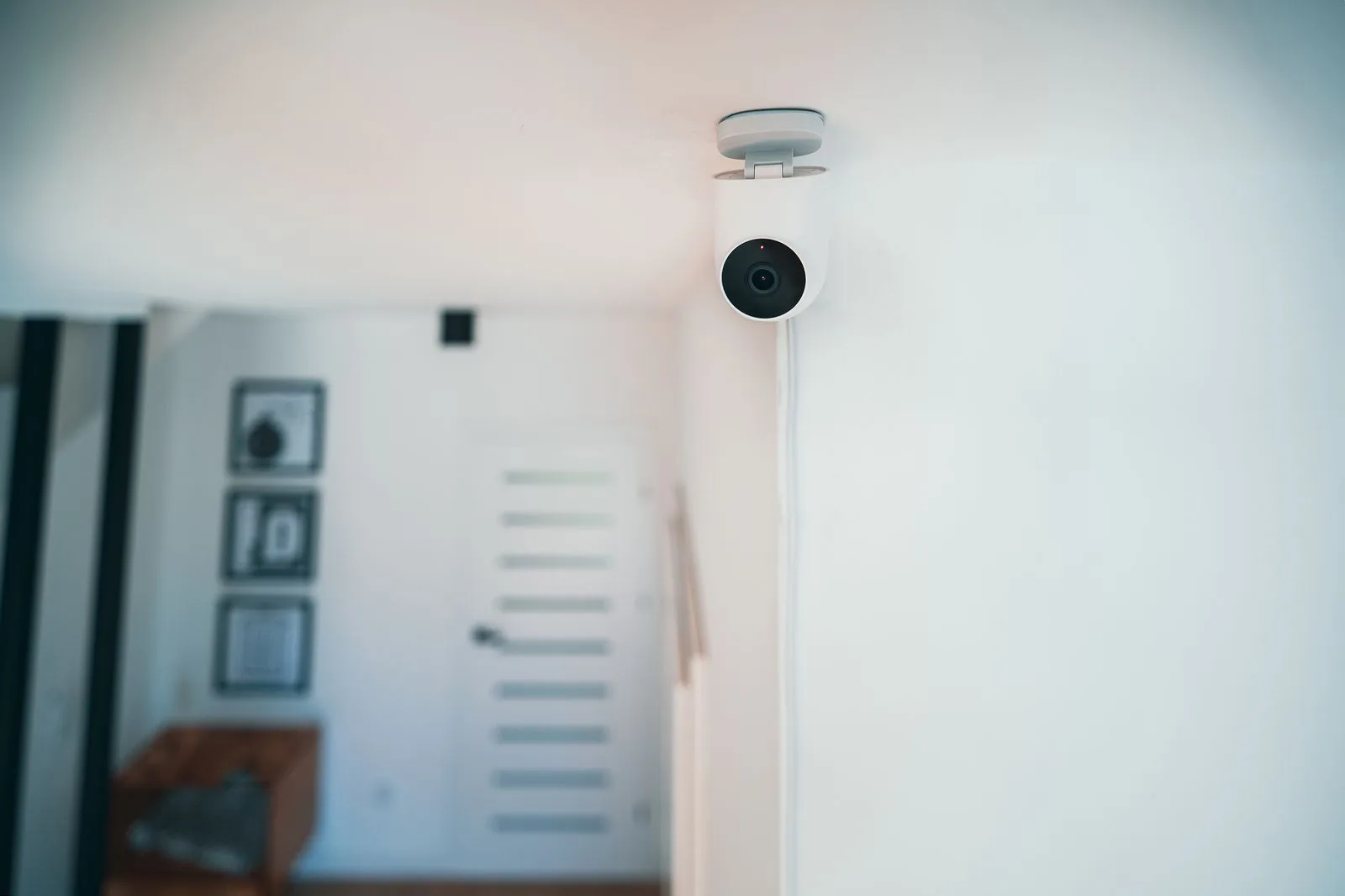
In brief: a tenant can install a security camera inside their rented home without special consent, as long as it only films private areas. An outdoor camera must never capture the public road, a shared corridor or a neighbour’s home. The landlord’s written consent is only required if the installation involves drilling or a lasting change to the property. Flatmates and anyone who regularly comes into the home must be told the cameras are there.
Fitting a security camera in a rented home raises a question that sounds simple: how far can a tenant go without the landlord’s consent? A rented home remains a space the tenant can secure, but three limits apply, in this order: what the lease says about building work, the CNIL’s rules on what may be filmed, and respect for the privacy of other occupants and neighbours. This holds regardless of the type of tenancy, unfurnished or furnished, private or social housing, and without needing a specific clause in the lease. This guide covers each point, from choosing a spot for the camera to moving out.
What a tenant can install, indoors and outdoors
| Situation | Landlord’s consent | Still forbidden |
|---|---|---|
| Wireless indoor camera, placed or stuck on | Not required | Filming a flatmate without telling them |
| Video doorbell or camera at the front door | Not required if the doorstep stays private | Filming a neighbour’s corridor or doorstep |
| Outdoor camera on a private garden or terrace | Not required if no drilling | Filming the street, a shared garden or a neighbour’s window |
| Camera fixed by drilling a wall or facade | Required, in writing | Altering the wiring without telling the landlord |
Summary of CNIL rules and lease obligations, to check case by case against the building’s own regulations.
The principle: a rented home stays a space to secure, within clear limits
A tenant has the same right to safety and peace of mind in their home as an owner-occupier. The general rules on video surveillance for private individuals therefore apply in the same way: a camera may film the inside of the home and its private access points, never the public road or other people’s movements. What differs for a tenant, compared with an owner-occupier, comes only from the contractual relationship with the landlord: any lasting change to the property requires their consent, separately from the privacy rules, which apply identically either way.
A residential lease usually says nothing specific about video surveillance: unless the lease states otherwise, ordinary tenancy law, not a camera-specific regime, governs whether the landlord’s consent is needed. A landlord or agency that demanded prior consent for a wireless, unfixed camera would be stepping outside this legal framework; when in doubt, re-reading the lease before installing anything remains a useful precaution.
Installing a camera inside the home
Inside the living areas, a tenant can install one or more cameras without telling the landlord, as long as the unit stays removable: stuck on with adhesive, placed on a stand on a piece of furniture, or fixed with screws that can be taken out without visible damage. These cameras cover the living room, the entryway, internal hallways or a bedroom, and many models let the owner check the footage remotely from a mobile app, which means protecting the linked account with a password of its own.
Two limits still apply. First, when sharing a flat or living as a couple, every occupant must be told where the cameras are and that they exist: capturing another occupant’s images without telling them risks a dispute, or worse, a breach of their privacy. Second, a tenant should never point an indoor camera at a window that looks directly onto a neighbour’s home or garden. A third point concerns sound: for a device that also records audio, such as some video doorbells or connected cameras, capturing someone’s words without their knowledge in a private place remains governed by law; the recording should serve only the household’s security, never keeping or sharing a visitor’s or a relative’s words without their knowledge.
Filming outdoors and the public road: what stays forbidden
A camera placed outside the rented home, on a balcony, terrace or private garden, remains allowed if its field of view stays limited to that private space. A tenant is not, however, allowed to film the public road, even to watch over a car parked in front of the building: only public authorities and certain licensed professionals may install a camera that captures the street, under a prefectural authorisation. A shared corridor, a stairwell, a shared car park or a neighbour’s doorway fall under the same ban, whether the property is a standalone home or part of a co-owned building.
In a co-owned building, a garden or courtyard shared between several homes counts as a common area, even when only one tenant uses it regularly: installing an individual camera there follows the same rules as a corridor or an entrance hall, and requires the consent of the building’s co-owners or social landlord, never a lone tenant’s decision. Only a space the lease clearly marks as private, such as a garden or terrace attached to the rented home, lets a tenant install a camera on their own.
For an outdoor camera exposed to the weather, it is worth checking the housing’s protection rating before buying: the guide on what IP65 means explains what that marking does, and does not, guarantee against rain and dust.
Does the landlord’s written consent matter?
The rule that applies to installing a camera comes from the general law on tenant building work, not from a rule specific to video surveillance: a tenant may make changes that do not durably alter the property without asking for permission. Fitting a wireless camera, sticking it on or screwing it into an existing fixture falls into that category. As soon as an installation requires drilling into a load-bearing wall or a facade, fitting a permanent cable, or altering the existing wiring, it becomes a structural change under the lease: the landlord’s written consent is then required before any work begins.
Without that consent, the landlord can, once the tenant leaves, demand that the property be restored at the tenant’s expense, or keep the installation without compensating the tenant; if the work has compromised the safety of the property, for example badly insulated wiring, the landlord can even demand it be put right before the lease ends. A simple written request to the landlord, before the work starts, avoids this risk and makes clear who removes the device at the end of the tenancy. Sending that request by registered letter with acknowledgement of receipt, describing the planned installation precisely (location, any drilling, electrical connection), makes consent easier to obtain and keeps a useful record in case of a later dispute.
Respecting the privacy of flatmates and neighbours
Beyond the landlord’s consent, a security camera remains subject to the same privacy rules as any image-capturing device. In a building, cameras installed by a tenant must never cover the common areas managed by the co-owners or the social landlord: an entrance hall, a stairwell, a bike or bin store fall, where needed, under a collective video protection system decided by the building’s management or the landlord, never an individual tenant’s installation. A CNIL fact sheet on social housing points out that even a collectively decided video protection system for common areas must never film front doors, balconies or windows of individual flats: the same principle applies just as much to a camera installed by a single tenant.
When sharing a flat, telling the other occupants that cameras exist and where they are placed remains the best protection against a dispute: a camera aimed at a flatmate’s room or belongings, without their consent, amounts to a breach of their privacy. The same care applies to a frequent visitor, such as a partner or relative who stays over often without being registered as a resident: telling them about the cameras avoids any misunderstanding.
What to do in a dispute with the landlord or a neighbour
A disagreement over installing a camera is usually best settled amicably: a letter to the landlord describing the planned device and its field of view often secures tacit agreement or leads to an adjusted installation. When the disagreement concerns larger building work, the local conciliation board (commission départementale de conciliation) can be asked to step in free of charge before any court action is considered. If a neighbour’s camera seems to film a private space, several options exist: reporting it to the building’s management, filing a complaint with the CNIL, or bringing a neighbour-nuisance case to a civil court. A camera that captured images of passers-by on a shared path has already been found to constitute such a nuisance by the courts. In every case, keeping a written record of exchanges with the landlord or the neighbour makes any dispute easier to resolve.
What happens when the tenant moves out?
A camera installed without building work belongs to the tenant, who is free to remove it when they leave, like any personal item. When the installation required drilling or a permanent fixture, it helps to have agreed in writing, from the start, who removes the device and who fills in any holes: absent a different agreement, that restoration falls to the outgoing tenant. Checking the move-out inventory with this in mind avoids a deduction from the security deposit for a camera mount left in place or poorly removed.
Before choosing a model, it is also worth asking a home insurer whether security cameras affect the policy, for better or worse, since some insurers value a better-secured home. This check does not replace any of the rules set out above: it simply joins the list of points worth clarifying before installing anything, alongside the landlord’s consent and keeping the other occupants informed.